Tcl
ActiveTcl: Tcl Distributions & Enterprise Support
The Trusted Tcl Distribution, Backed by Enterprise Support
ActiveState builds and maintains ActiveTcl for Windows, Linux, and Unix. Existing customers can log in to to download current builds. New to ActiveState? Talk to our team to get access, whether you need a specific version, Beyond-EOL support for Tcl 8.6, or an enterprise deployment.

Get ActiveTcl
Existing customers: Log into download your current ActiveTcl build.
New to ActiveState? ActiveTcl access is provided through our team, not a public download. Contact us to get set up, whether that's a standard Windows/Linux/macOS build, an archival version for Solaris, or AIX, or an enterprise support agreement.
The ActiveTcl 8.6 distribution includes:
Core OO system
Coroutines
Core zlib support
PNG image format
ttk::spinbox Widget
Tcl Database Connectivity (TDBC)
Built-in canvas text rotation
Running Tcl in Production? Here's the Real Risk.
The language isn't the risk. Running it unsupported is. Outdated builds, unpatched vulnerabilities, and no clear path forward when something breaks in a system nobody currently on staff originally built, that's what turns a stable legacy system into a liability.
ActiveState offers commercial support, security patching, and custom builds for teams that can't afford downtime or an unanswered CVE.
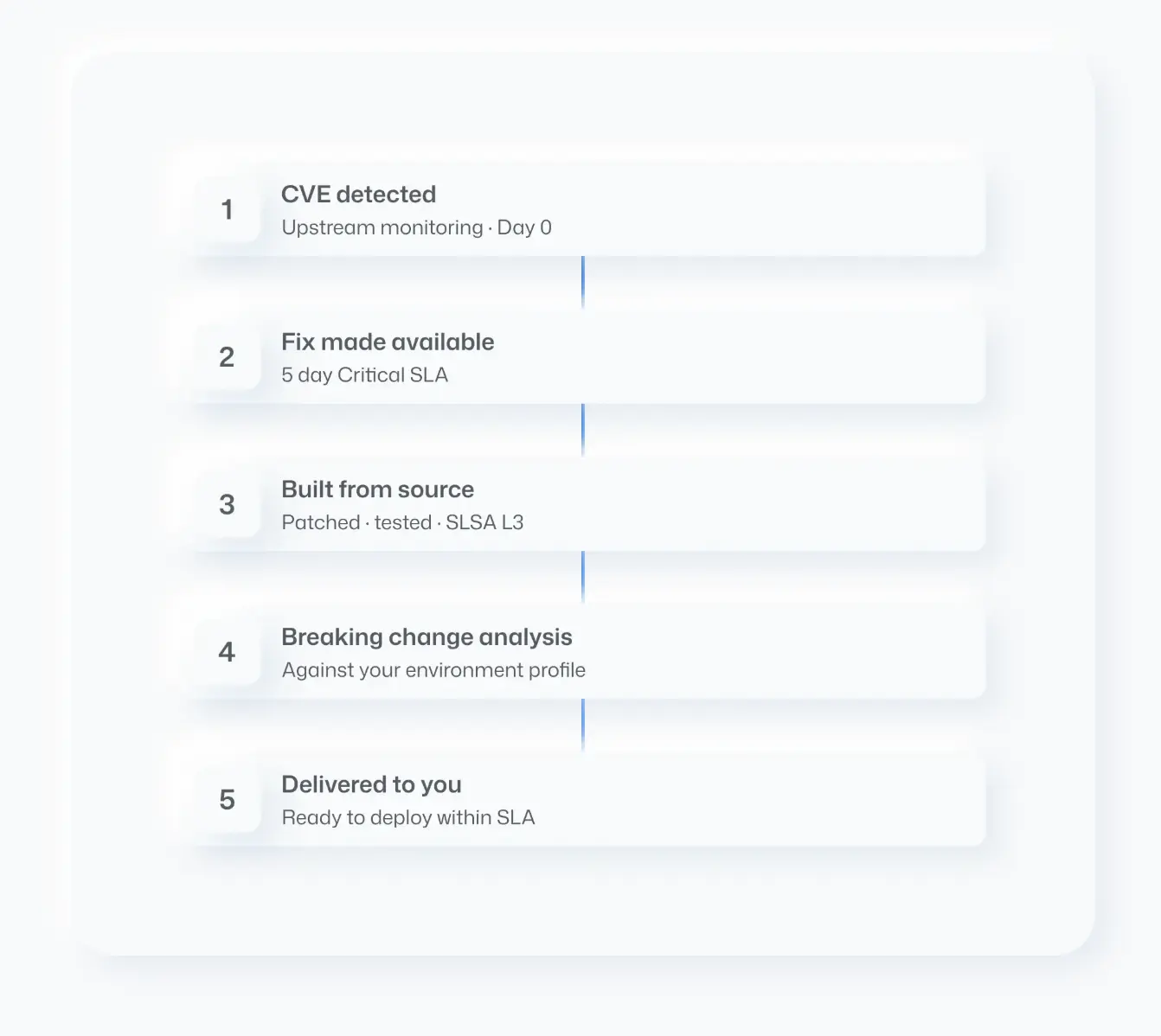
Why Teams Choose ActiveState for Tcl
Supported Tcl distributions
Built, tested, and maintained releases across the versions enterprises actually run in production, including versions no longer supported by the community.
Security patching and vulnerability remediation
On a contractual SLA, not best-effort.
Migration and modernization support
For teams moving off end-of-life versions or consolidating custom builds.
Who This Is For
Engineering and infrastructure teams
maintaining embedded, test automation, or industrial systems built on Tcl.
Security teams
that need a defensible answer when an auditor asks about EOL software in production.
Organizations
evaluating whether to maintain, migrate, or replace legacy Tcl systems and need expert guidance either way.
FAQs
Still have questions?
Talk to our team.
Where can I download ActiveTcl?
Existing customers can log in ActiveState to access current ActiveTcl builds. If you're new to ActiveState, contact our team to get set up with the right build for your environment.
Is ActiveTcl still supported?
Yes. ActiveState has supported Tcl/Tk continuously since 1997, and continues to build and maintain current releases, including Beyond-EOL support for Tcl 8.6.
Is there a cost to use ActiveTcl?
Community-tier runtime builds are available at no cost for existing Platform customers. Enterprise-level commercial support, custom builds, and indemnification are available on a paid basis.
What platforms does ActiveState provide ActiveTcl builds for?
Windows and Linux for standard builds. ActiveState also provides commercially available archival versions and binaries for Solaris, HP-UX, and AIX, along with support for each.
Can I get security patches for an older or end-of-life version of Tcl/Tk, like 8.6?
Yes. ActiveState offers Beyond End-of-Life (EOL) maintenance for Tcl 8.6, including security patching and vulnerability remediation on a contractual SLA.
What's the difference between ActiveTcl and the Curated Catalog?
ActiveTcl is ActiveState's built, tested Tcl distribution. The Curated Catalog extends the same model, vetted and continuously remediated builds, across every open source language your organization runs, not just Tcl.
Does ActiveState help teams migrate off Tcl, not just support it?
Yes. Our team supports both paths: keeping an existing Tcl deployment secure and current, or planning a migration if you're moving workloads to another language.
Who do I talk to about a Tcl support contract or enterprise licensing?
Use the Contact Us form on this page. A member of our team will follow up directly.
Running More Than Tcl?
If Tcl is one piece of a larger open source footprint, the Curated Catalog extends the same model, vetted, continuously remediated builds, delivered through the artifact repositories and package managers your teams already use, across nine modern ecosystems: Python, JavaScript, Java, .NET, C, C++, R, Go, and Rust.
Same standard your Tcl deployment gets. Same governance, applied everywhere your developers are pulling packages from.
%20(1).webp)